Why Optimism Can Leave You Frustrated
Simple optimism has its limits. Positive thinking, in contrast, will help you develop mental toughness.
- Evaluate how you approach unpleasant situations. Do you just want to get through it and be done with it so you can experience something that makes you happier?
- Deliberately adjust your thinking. Situations and circumstances you don’t enjoy are reality, so consider how you can approach these times as an opportunity to learn and grow stronger.
- Don’t just dismiss this. Positive thinking takes effort, but it is a powerful cornerstone of a strong mind. Look to maximize tasks and circumstances you may not particularly enjoy so you benefit most.
Transcript
Optimism isn’t all it’s cracked up to be.
…
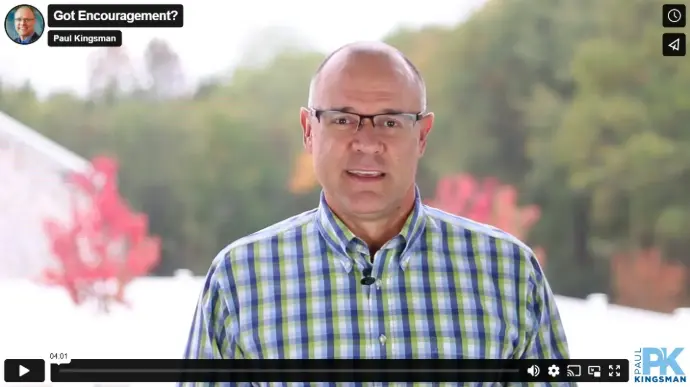
Optimism isn’t necessarily bad, but the real power lies in positive thinking.
I recently had the opportunity to interview LaRae Quy on the Distraction-Proof Advisor Podcast. LaRae’s a former FBI counterintelligence agent, and she mentioned this regarding positive thinking versus optimism:
“Positive thinking is a cornerstone of mental toughness because positivity creates a mindset that can adapt to obstacles and roadblocks that show up in both business and life. Optimists, however, believe that things will change, and for the better. They believe that everything will work out okay in the end. An optimist can never relax. They can’t afford to let sadness creep in. They can try to follow the famous self-help advice and eliminate the word failure from their vocabulary.
This is from her book Secrets of a Strong Mind.
An example came to mind from my swimming days. Occasionally we used to train early in the mornings in an outdoor pool to get used to racing in that particular pool, about five weeks before a meet there. And on the mornings we would train there, and it was freezing. People would mention, “Hey, we’ll be out of this before we know it, and this afternoon we’re going to be back in our home pool, which is heated and warm.” All through the morning workout, you’d hear them parroting messages like that. It really made me think: by dismissing the present and focusing on what’s coming, they’re foregoing the opportunity to improve right now. The reality was when we would swim the heats in a few weeks’ time, we were going to be swimming in that cold, early morning time. We needed to get used to these conditions, as unpleasant as they might be. So it made me focus on the immediate situation and use it to grow, use it to improve, use it to toughen up.
Advisors can often be in similar situations. I was talking with an advisor a couple of weeks ago, and she told me about several meetings that she had the following day. She said, “The first one, I don’t really enjoy this particular client. They ask a lot of questions, and they tend to get negative. But, that’s okay because my last meeting is with a family I love.”
I hesitated and then suggested to her, “What if you dig a little further? Approach the first client meeting as a challenge to learn more about their mindset. What’s shaped them to be thinking about advisors the way they do? What’s influenced their lives? What’s influenced their opinions such that want to constantly question you and they sound like they’re second-guessing you? Let’s not dismiss this meeting. Let’s learn more from this present situation.”
She sat back and thought before agreeing, “Okay.” It was interesting calling her the next week and hearing what she learned. The information was hugely valuable for her—and we’re not going to go into it here, but it was hugely valuable for her. Now she’s actually looking forward to talking with that person the next time around.
You want to understand the difference between optimism and positive thinking. To do this
- Evaluate yourself. What situations have you thinking that you just want to get over this particular task to get on with something that’s going to make you feel happier?
- Adjust your thinking. Look at this opportunity, this circumstance that you’re in. How can you approach it positively? It’s going to happen, so how can you come out the better for it?
- Take action. Don’t just dismiss this subtle but powerful difference. Look at those times when you are procrastinating. Look at those “eat-the-frog” moments and understand this is the reality of the moment. Instead of just moving forward through this task to get to something better, consider, “How can I maximize this task so I’m learning the most I can from it?”
Understand we all experience a mix of optimism and positive thinking, but know yourself. Recognize your responses and attitude regarding viewing things optimistically versus thinking positively. Decide to make the most you can out of any situation—even ones you don’t particularly enjoy.
I look forward to bringing you another Distraction-Proof Advisor Idea next week.
For more Distraction-Proof Advisor videos, click here.
CFD Companies is proud to be collaborating with Paul Kingsman.
About Paul Kingsman
Paul Kingsman, Ash Brokerage’s Practice Management Director, is a sought-after expert on how to be distraction-proof. Through his speaking, writing, and coaching, he teaches financial services professionals how to maintain focus and take practical daily steps to successfully grow their businesses and achieve outstanding long-term results. To find out more about Paul and how he can equip you or your team to achieve your own outstanding results, use the contact form below.
Use the form below to reach out to Paul.

*Paul is Registered with Ash Brokerage. Ash Brokerage is one of the largest insurance brokerages in the United States, with more than 400 employees nationwide.
About CFD Companies
CFD Companies is home to a fully independent Broker/Dealer and RIA that believe individuals are best served by a financial professional who possesses the freedom to implement personalized planning and investment strategies. The CFD Companies operate on the premise that an adviser’s Broker/Dealer and RIA should act as a partner and resource network, empowering adviser-client relationships through trust, innovative support and a shared commitment to mutual growth. Contact Us with any questions you have for us at CFD Companies.
While others operate in cliché, CFD operates in commitment. To learn more about that commitment and the future of your business in partnership with CFD, reach out to us below.